Gardening is one of the great pleasures of life, and some of you know I have recently been bitten by the bug myself, and buying and swapping plants has become a real joy.
We are very lucky in Tunbridge Wells to have such a range of open spaces, ranging from vibrant flowerbeds in Calverley Grounds to productive allotments, and many homes locally have their own gardens. For those that don’t, there are a variety of local volunteering groups such as Crossways Community and Friends of Dunorlan Park, where, as well as the pleasure of gardening, you will also benefit from closer links with your local community.
The Royal Horticultural Society highlights the many benefits of gardening, that include increasing strength, mobility and longevity as well as a decrease in mental stress – RHS.org.uk
As rewarding as gardening is, it is also easy to forget that it can be physically demanding. Statistics from RoSPA show that thousands of people in the UK visit A&E every year because of gardening-related accidents and pain. They have a useful list here for gardening safety.
More commonly, as Osteopaths in Tunbridge Wells, we see gardeners who develop nagging aches or strains over time, simply from overdoing it or using the wrong technique. These include back pain, neck pain, shoulder pain and strains, and knee problems.
The good news is that most of these injuries resolve quickly with osteopathic treatment and are then kept at bay with the personalised advice we offer to help you manage the gardening you enjoy.
Whether you’re a member of a local gardening club, enjoy supporting the Tunbridge Wells in Bloom initiative, or simply tend to a few pots on the patio, this guide will help you stay healthy and pain-free all season long.
Why Gardening Can Be Tough On Your Body
Gardening often means hours of repetitive movement – digging, weeding, raking, pruning, lifting, and stretching. Unlike gym exercise, these activities are rarely preceded by a warm-up and because it is so enjoyable, we tend to keep going longer than we perhaps should. The body is put through a huge range of motions, often using muscles that aren’t regularly activated, and sometimes in awkward or prolonged positions.
Suffering from a gardening injury?
Top 5 Gardening Injuries We See (And How They Happen)
1. Back Pain
Why it happens?
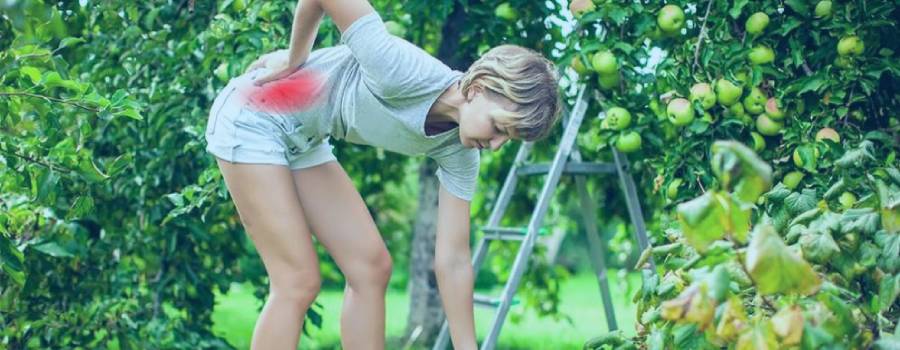
Lower back pain is the most frequent gardening complaint. Prolonged bending over flower beds, lifting heavy bags of compost, or twisting awkwardly when digging can all strain your back muscles and joints. Sometimes, even reaching out to prune a bush or pulling up stubborn weeds can trigger acute back pain.
Who’s at risk?
Anyone can experience back pain, but it’s especially common if you’re not used to physical activity or if you have a history of back issues.
2. Knee Pain
Why it happens?
Hours spent kneeling, squatting, or getting up and down repeatedly can leave your knees sore, stiff, and sometimes swollen. Gardening on hard surfaces or uneven ground increases the risk, as does kneeling without a cushion or support.
Who’s at risk?
Knees with osteoarthritis or previous injuries can be exacerbated, but even “healthy” knees can be aggravated by poor habits.
3. Shoulder Strain
Why it happens?
Many gardening tasks involve reaching above shoulder height, such as trimming hedges, hanging baskets, or retrieving tools from high shelves. These activities can strain the rotator cuff and surrounding shoulder muscles, sometimes leading to inflammation or even a “frozen shoulder.”
Who’s at risk?
Anyone with poor upper-body strength or mobility. Even experienced gardeners can develop shoulder pain if they overreach or use heavy equipment.
4. Hand and Wrist Injuries
Why it happens?
Using secateurs, trowels, or other hand tools – especially if they’re blunt or awkward to grip – can lead to repetitive strain injuries, tendonitis, or even carpal tunnel syndrome. Digging, pruning, or raking for long periods can also cause pain or numbness in the hands and wrists.
Who’s at risk?
Gardeners with arthritis or existing hand/wrist problems, but anyone can develop symptoms with enough repetition or the wrong tools.
5. Upper Back and Neck Strain
Why it happens?
Overhead tasks such as trimming tall hedges, reaching to prune, tying in climbers, or lifting above shoulder height can strain the thoracic spine and the muscles between the shoulder blades. Prolonged forward bending while weeding can also cause stiffness in this area. If you have upper back pain after gardening, the same principles apply: gentle movement, alternating heat and ice after 48 hours, and osteopathic treatment if it does not settle within a couple of days.
Who’s at risk?
Desk workers (who already spend lots of time in one position) are particularly at risk, but neck strain is a common complaint for all gardeners, often in addition to shoulder pain.
Read our latest guide on back pain treatment in Tunbridge Wells.
What To Do If You Have Lower Back Pain After Gardening
If you’ve already overdone it and are reading this with an aching back, you’re not alone. Lower back pain is the most common complaint we see after a busy day in the garden. The good news is that most cases resolve well with the right approach – and the majority of people we treat are back to full activity within a week or two.
In the First 24–48 Hours: Immediate Steps
• Keep gently moving – avoid lying in bed, however tempting, as this will cause you to stiffen up. Short walks can help improve mobility.
• Apply an ice pack (wrapped in a cloth) for 10–15 mins every few hours for the first 24 hours.
• After 48 hours, switch between a heat pad or hot water bottle and an ice pack (10 mins of each) to ease muscle tension.
• Over-the-counter anti-inflammatory gel or tablets can help if appropriate for you.
• Avoid returning to heavy gardening until any sharp pain has settled.
How to Naturally Soothe Your Lower Back After Gardening
• Gentle walking – even 10–15 minutes keeps your back mobile and helps disperse inflammation.
• A warm bath with Epsom salts to ease muscle cramping and tension.
• Gentle self-massage of the lower back muscles to reduce spasm.
Why Does Lower Back Pain After Pulling Weeds Hurt So Much?
Weeding combines sustained forward bending with repetitive pulling and twisting – this can be a demanding combination for your lumbar spine, muscles, and joints. We can be very focused when gardening and weeding often continues for long stretches in awkward positions without a break. This is one of the most common causes of acute lower back pain after gardening, and it is very treatable.
When Should You See an Osteopath for Back Pain After Gardening?
Seek advice if:
• Pain has not eased after 2–3 days of rest and self-care.
• Pain is severe, or shooting down into your leg, buttock, or foot.
• You notice numbness, tingling, or weakness in a leg.
• You have a previous back injury that has flared up.
How to Prevent Gardening Injuries (Your Complete Local Guide)
Gardening can be a full-body workout – so treat it like one! Follow these proven prevention tips to keep gardening fun and pain-free.
Warm Up and Stretch First
Just five minutes of gentle stretching before you start can make a big difference. Focus on your back, shoulders, hips, wrists, and knees. Not sure where to start? Check out The Royal Horticultural Society’s stretching guide or ask us for a personalised warm-up routine.
Use the Right Tools – And Use Them Wisely
Practice Good Posture & Lifting Technique
Work Smarter, Not Harder
Protect Your Body with Supports
Listen to Your Body – And Know When to Stop
How Osteopathy Can Help With Gardening Injuries
At CJ Osteopathy in Tunbridge Wells, we specialise in helping gardeners recover from injuries and return to the hobbies they love. Osteopathy can:
Gardening Injuries FAQ
Can osteopathy help after a gardening injury?
Absolutely. Osteopathy can reduce pain and swelling, restore movement, and get you back to the garden sooner.
Is it safe to garden with back pain?
With caution. Take regular breaks, use supports, and stick to light tasks. If pain increases, seek professional advice.
How soon after an injury should I see an osteopath?
It’s best to seek help as soon as possible for the fastest, safest recovery.
Conclusion
Gardening is a wonderful way to stay healthy, active, and connected to your community – but it shouldn’t come at the cost of pain. By taking steps to prevent injury and seeking expert advice when needed, you can enjoy your garden all year round, for many years to come.
Experiencing aches or pains after gardening?
Contact CJ Osteopathy or book online for friendly, expert care right here in Tunbridge Wells.