What are the most common football injuries?
Hamstring and groin strains are the most common football injuries we see. Hamstrings, the big muscles in the back of the thigh, work super-hard! They must control the lower leg while they’re lengthening (eccentric contraction), as well as controlling the knee when the foot is planted on the ground.
As you can see from lists of injured players, by far most footballing injuries occur in the lower limb. Why? Because playing involves short sprints, kicking, and rapid direction changes. These ballistic movements put a lot of stress on the muscles and joints of the leg and pelvis.
Groin strains usually affect the adductor muscles, which are on the inside of the thigh. They are at risk during football because of movements such as sliding tackles or side steps. However, it’s important to differentiate this from other forms of groin pain. Problems with the pelvic joints, instability, hernia or tendinopathy can also give pain in a similar area. Correct treatment depends on correct diagnosis, so a proper evaluation is vital.
After muscle strains, the other football injuries we often see are knee and ankle sprains. The ligaments of these joints come under pressure from sudden twisting movements, especially when the foot is planted on the ground.”
If you are dealing with a football injury in the Tunbridge Wells area, our osteopaths are experienced in treating the full range of sporting injuries — from hamstring strains to ankle sprains.
How do you treat footballing injuries?
First aid is really important, even before the player arrives at clinic for treatment. So making sure players know to use the ‘PRICE ’ protocol (that’s ‘protection, rest, ice, compression, elevation’) in the first 24–72 hours is a good start.
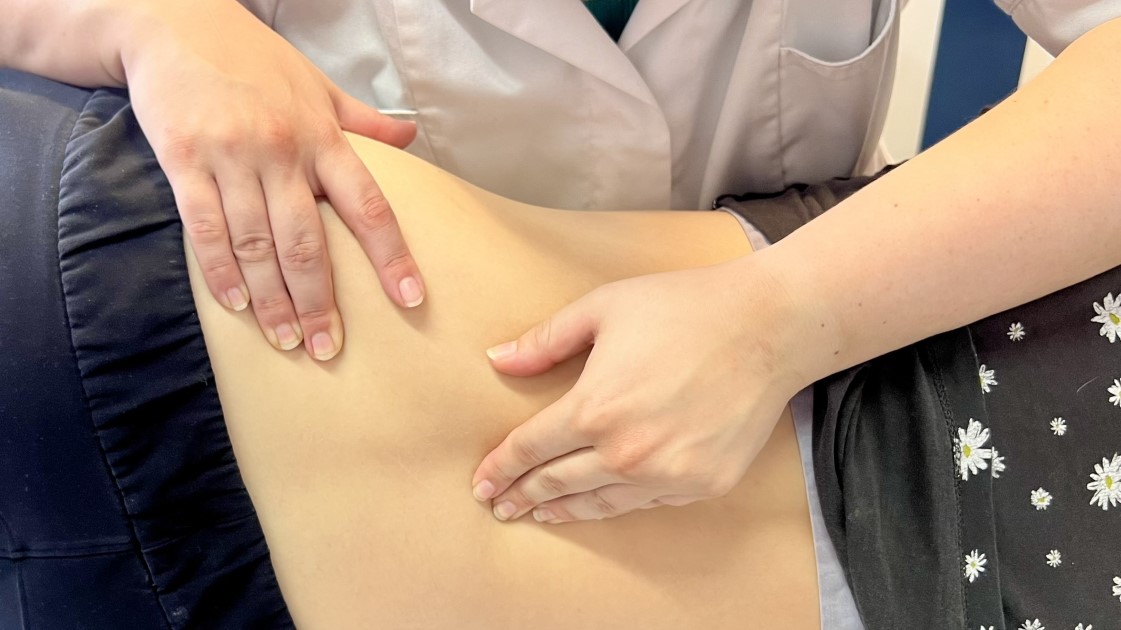
When the footballer arrives for treatment, my method of evaluating them will depend on how much movement they have at the time. Sometimes, I can judge overall function, and see weakness or asymmetry, by using whole-body movements, such as squats. Other times, I’ll be much more focused on a swollen knee, assessing it by gently moving the joint myself.
Whatever state a player is in when they arrive, I can draw on a range of treatment techniques to suit the situation. Dry needling (medical acupuncture) can be a great help in reducing pain. Often, a combination of specific massage and mobilisation will go a long way to kickstarting the healing process.
Once things are settling down, I love to help a player return to full capacity with carefully progressed rehabilitation exercises. Having had a few injuries myself, I know how frustrating it is to be on the bench!
Struggling with a football injury?
Alice, our Tunbridge Wells osteopath, has a degree in Sports Science alongside her qualification in osteopathy – making her ideally placed to help you get back on the pitch. We typically have appointments available within the week.
How Long Do Football Injuries Take to Heal?
Recovery times vary quite a bit depending on the type and severity of the injury, but the following gives a general guide for the most common football injuries we see:
- Hamstring strain: Mild strains typically settle in 2 to 4 weeks. Moderate strains may take 4 to 8 weeks. Severe strains can take 3 months or more.
- Groin strain (adductor muscles ): Mild strains usually resolve in 1 to 3 weeks. Moderate strains take 3 to 6 weeks. Returning to full training too soon is the most common cause of re-injury, so it is worth getting a proper assessment.
- Knee sprain: Minor sprains often improve in 2 to 4 weeks. More significant ligament injuries may require 6 to 12 weeks and careful rehabilitation.
- Ankle sprain: Mild ankle sprains typically settle in 2 to 3 weeks. More severe sprains can take 6 weeks or longer.
These are, of course, general timelines. If your pain is not improving as you would like, or your injury returns as you try to get back on the pitch, please book an Osteopathic appointment with us for a full assessment and plan to get you back to full strength.
If you are based in Tunbridge Wells or nearby and are unsure whether your injury needs professional attention, feel free to give us a call — we are happy to advise.
Struggling with sports injuries?
If you need help with a football injury in the Tunbridge Wells area, Alice is here to help. With a degree in Sports Science alongside her qualification in osteopathy, she’s perfectly placed to get you back on track.
Want to know more about what an osteopath does?
We have a couple of great articles that will help you understand more about what an osteopath is and what an osteopath does. Please click the links below for further information.
Written By Alice Grandpierre, BSc (Hons) Sports Science, M.Ost - Registered Osteopath
 Alice Grandpierre holds a degree in Sports Science and is qualified in osteopathy, giving her a particularly strong foundation for treating sporting injuries. She is registered with the General Osteopathic Council (GOsC number 11066) and is a member of the Institute of Osteopathy. Alice is an avid footballer herself and plays for local Kent team Tonbridge Angels. She understands the frustration of time spent on the sidelines due to injury and is committed to helping her patients return to full fitness as quickly and safely as possible. Last updated: 09-04-2026